Enquiry Now

Electrocardiogram

Category Electrocardiogram

Electrocardiogram (ECG)


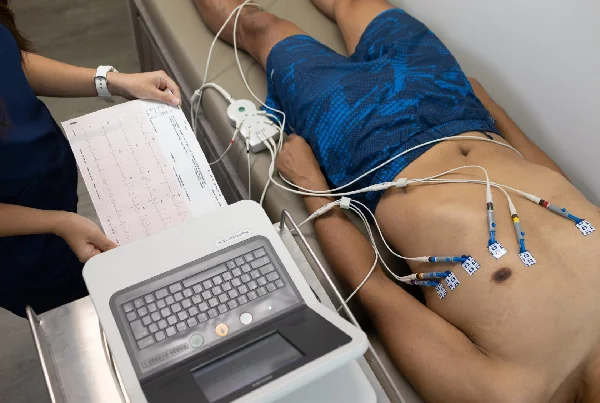
An electrocardiogram (ECG) is a simple test that can be used to check your heart's rhythm and electrical activity.

Sensors attached to the skin are used to detect the electrical signals produced by your heart each time it beats.

These signals are recorded by a machine and are looked at by a doctor to see if they're unusual.

An ECG may be requested by a heart specialist (cardiologist) or any doctor who thinks you might have a problem with your heart, including your GP.

It can be used to investigate symptoms of a possible heart problem, such as chest pain, palpitations (suddenly noticeable heartbeats), dizziness and shortness of breath.

An ECG can help detect:

  • Arrhythmias – where the heart beats too slowly, too quickly, or irregularly
  • Coronary heart disease – where the heart's blood supply is blocked or interrupted by a build-up of fatty substances
  • Heart attacks – where the supply of blood to the heart is suddenly blocked
  • Cardiomyopathy – where the heart walls become thickened or enlarged


There are 3 main types of ECG:

  • A resting ECG – carried out while you're lying down in a comfortable position.
  • A stress or exercise ECG – carried out while you're using an exercise bike or treadmill.
  • An ambulatory ECG (sometimes called a Holter monitor) – the electrodes are connected to a small portable machine worn at your waist so your heart can be monitored at home for 1 or more days.

Your Enquiry

Get Direction
Subscription Expired
Call Or Whatsapp Now
+91********91
+91********91